Reimagining Secure Customer Interactions with Secure Consult &
Empowering contact centers to safely handle sensitive, high‑trust customer journeys
Delivering secure, compliant, and seamless customer experiences is no longer optional — it’s foundational. Across industries such as financial services, healthcare, and public sector, organizations must enable customers to complete high‑trust actions (like payments or identity verification) without exposing sensitive information to agents or core contact center systems. Secure contact center customer journeys enabled through capabilities like Secure Consult & Transfer bring this capability to life by allowing agents to involve external secure endpoints in the conversation while maintaining strict privacy boundaries.
Today, we’re excited to highlight how Secure Consult & Transfer modernizes sensitive interactions and prepares organizations for the next generation of compliant service workflows.
How It Works
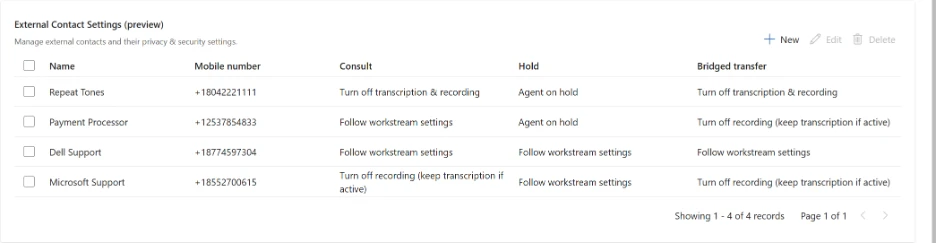
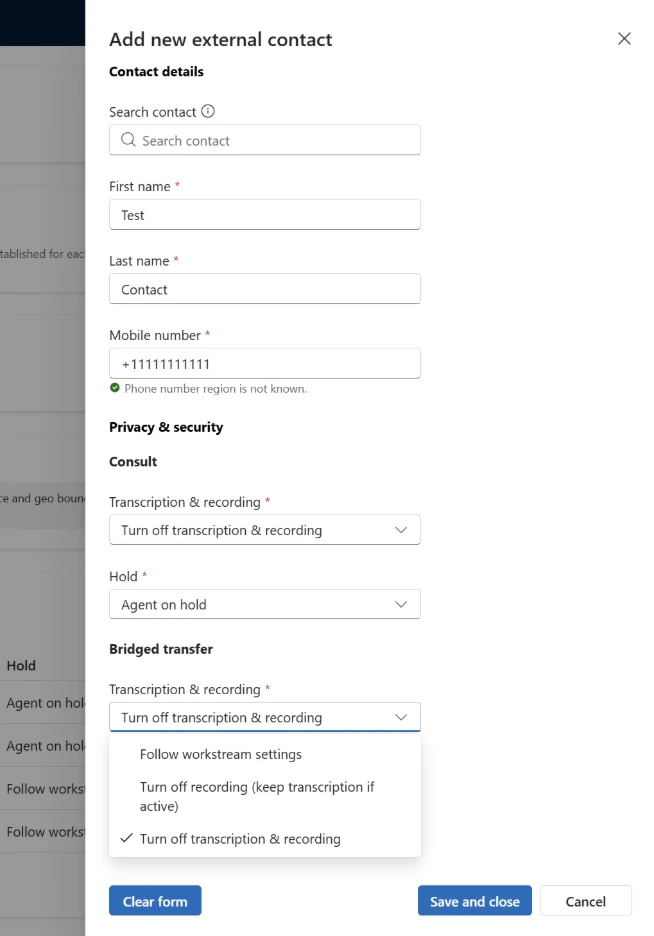
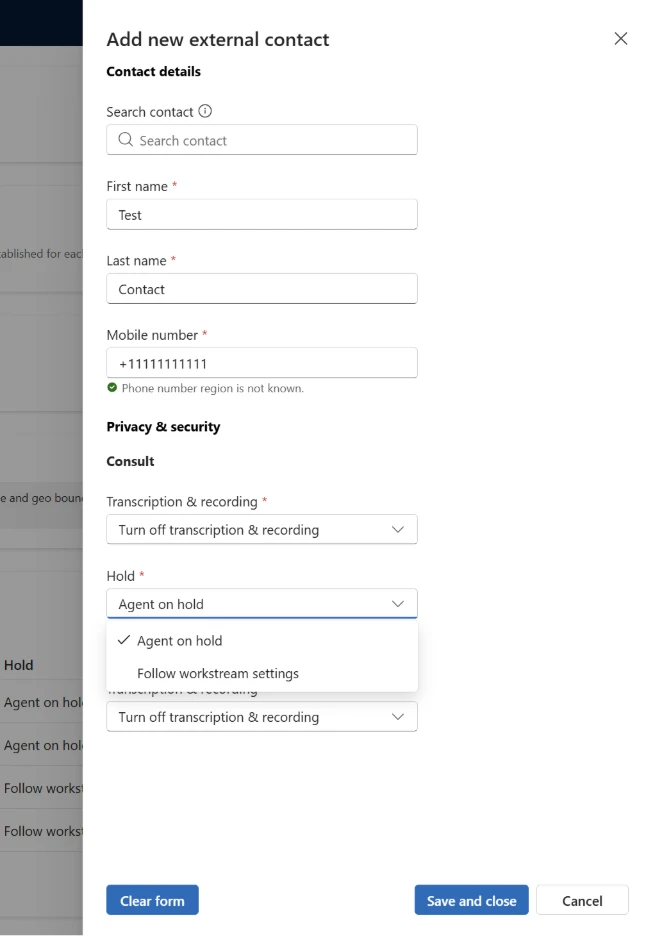
Secure numbers are created by applying specific settings to a contact. During runtime, the platform enforces the necessary protections instantly — without requiring manual intervention. The settings are flexible, and can be applied to only consult or transfer, or both. For consult and transfer the administrator can decide to follow workstream recording & transcription settings, stop recording but continue transcription, or stop both transcription & recording. Additionally, during consult, administrators can choose to either put their representatives on hold, or follow workstream settings to have the customer placed on hold with the representative able to take them off.
Key Benefits at a Glance
- Protect sensitive customer data without disrupting workflows.
- Enable secure payment and verification scenarios using external trusted endpoints.
- Automate compliance controls — recording and transcription management happens instantly and safely.
Secure Consult & Transfer ushers in a new era of secure, compliant customer interactions — one where sensitive workflows can happen inside the call experience without adding risk, friction, or operational burden.
If your organization handles sensitive customer actions, now is the time to explore how this capability can strengthen trust, reduce risk, and streamline your service operations.
Accelerating Secure Contact Center Customer Journeys with DTMF Broadcast
A modern foundation for high‑trust, compliant, real‑time voice interactions
As organizations modernize customer engagement, the need for secure and friction‑free voice workflows has become essential—especially for processes that rely on keypad inputs, such as payment authentication, IVR navigation, or identity verification. Traditional DTMF forwarding approaches rely on slow relays, creating latency, reliability gaps, and compliance concerns.
DTMF Broadcast introduces a new, faster way for participants in a call to share DTMF tones in real time— addressing these gaps by sending DTMF tones from one participant instantly to all non‑hold participants, far faster than traditional forwarding.
This includes all legs of the call, meaning that representatives can more reliably send tones to external endpoints, and if representatives drop off after a transfer to an external endpoint, customers will still be able to send DTMF to that endpoint, navigating IVRs independently.
How to Enable DTMF Broadcast
The toggle to enable DTMF Broadcast for an organization is in the Copilot Service Admin Center under Support Experience->Workspaces->Voice Experiences.

The post Reimagining Secure Customer Interactions with Secure Consult & Transfer appeared first on Microsoft Dynamics 365 Blog.